A warehouse rarely complains when lighting is underperforming. The signs show up elsewhere – rising utility bills, uneven visibility in aisles, more maintenance calls, slower picking, and avoidable safety risk. That is why many facility and operations teams are now looking beyond simple lamp replacement to improve warehouse lighting efficiency as part of a broader cost, safety, and sustainability strategy.
For most industrial sites, lighting is one of the clearest opportunities to reduce energy use without disrupting core operations. But the best results do not come from choosing the brightest fixture or chasing the lowest upfront price. They come from matching light levels, controls, fixture performance, and maintenance planning to how the warehouse actually works.
Key Takeaways
- By combining LED lighting, sensors, and intelligent controls, smart lighting systems help reduce energy consumption and improve visibility.
- A well-planned lighting design is important because different warehouse zones require different lighting layouts and distribution.
- For example, smart controls such as occupancy sensors, daylight harvesting, and scheduling help reduce unnecessary energy usage.
- Better lighting also improves operational safety, productivity, and visibility while reducing maintenance and downtime.
- Instead of relying on a one-time full replacement, data-driven and phased lighting upgrades often deliver better long-term value.
- Over time, smart warehouse lighting supports sustainability goals through lower energy consumption and reduced carbon emissions.
What improve warehouse lighting efficiency really means
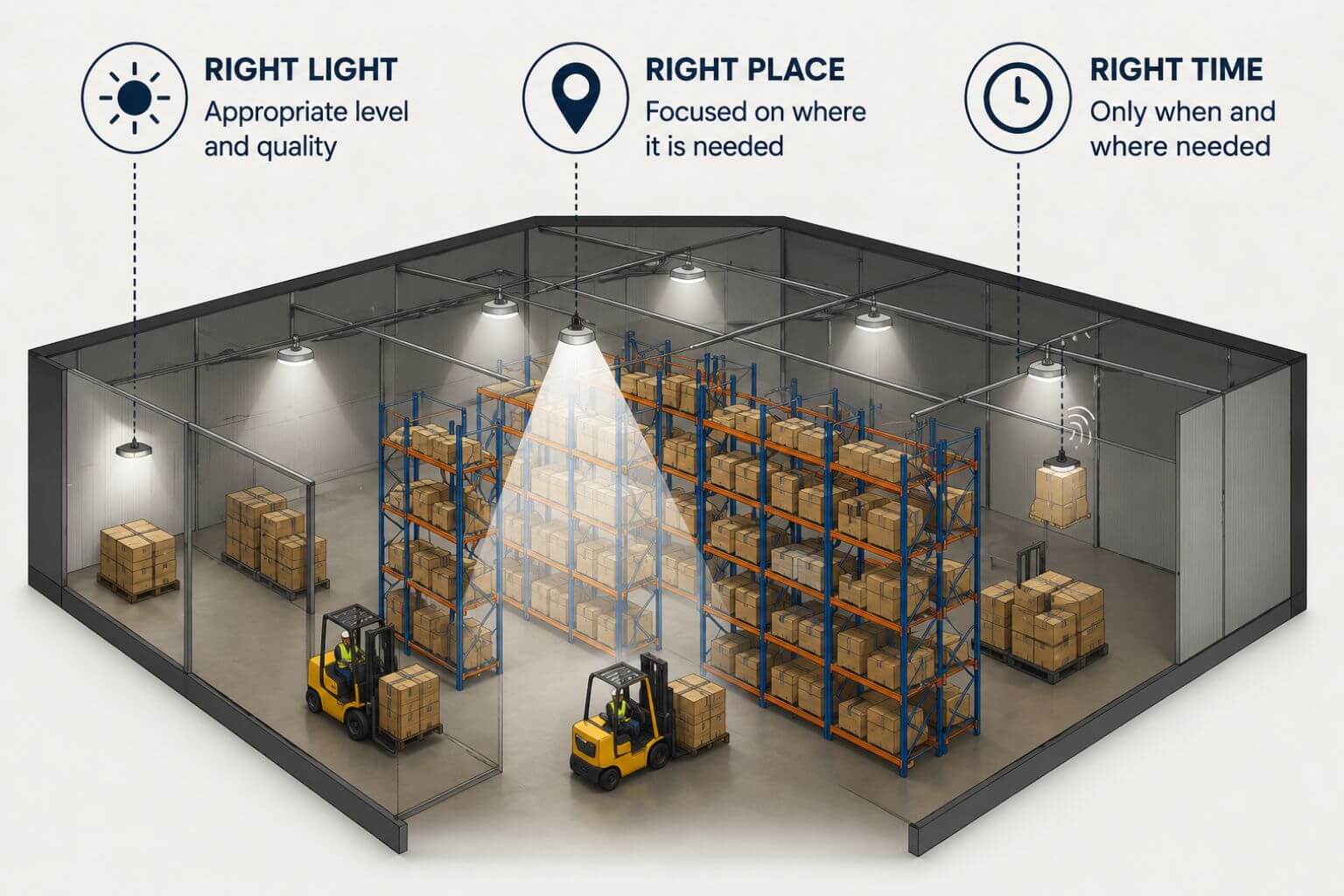
Lighting efficiency in a warehouse is not only about wattage reduction. Instead, it focuses on delivering the right light, in the right place, at the right time, with the lowest practical operating cost over the life of the system.
These inefficiencies often develop gradually and may go unnoticed until operational costs increase significantly.
Monitoring utility trends and identifying unusual consumption patterns can help address rising building energy costs early.
Key Considerations
Energy consumption
Maintenance frequency
Downtime & replacement planning
Worker comfort and visibility
Safety & compliance requirements
The Inefficient Warehouse Lighting
- Lower-watt fixtures creating dark spots at rack faces
- LED upgrades operating at full output in unoccupied aisles
- Excessive lighting runtime despite low activity areas
- Poor visibility affecting productivity and operational safety
Why It Matters
Real lighting efficiency is operational. Done well, it supports productivity, visibility, and workplace safety while reducing wasted energy.
Start with the warehouse, not the fixture
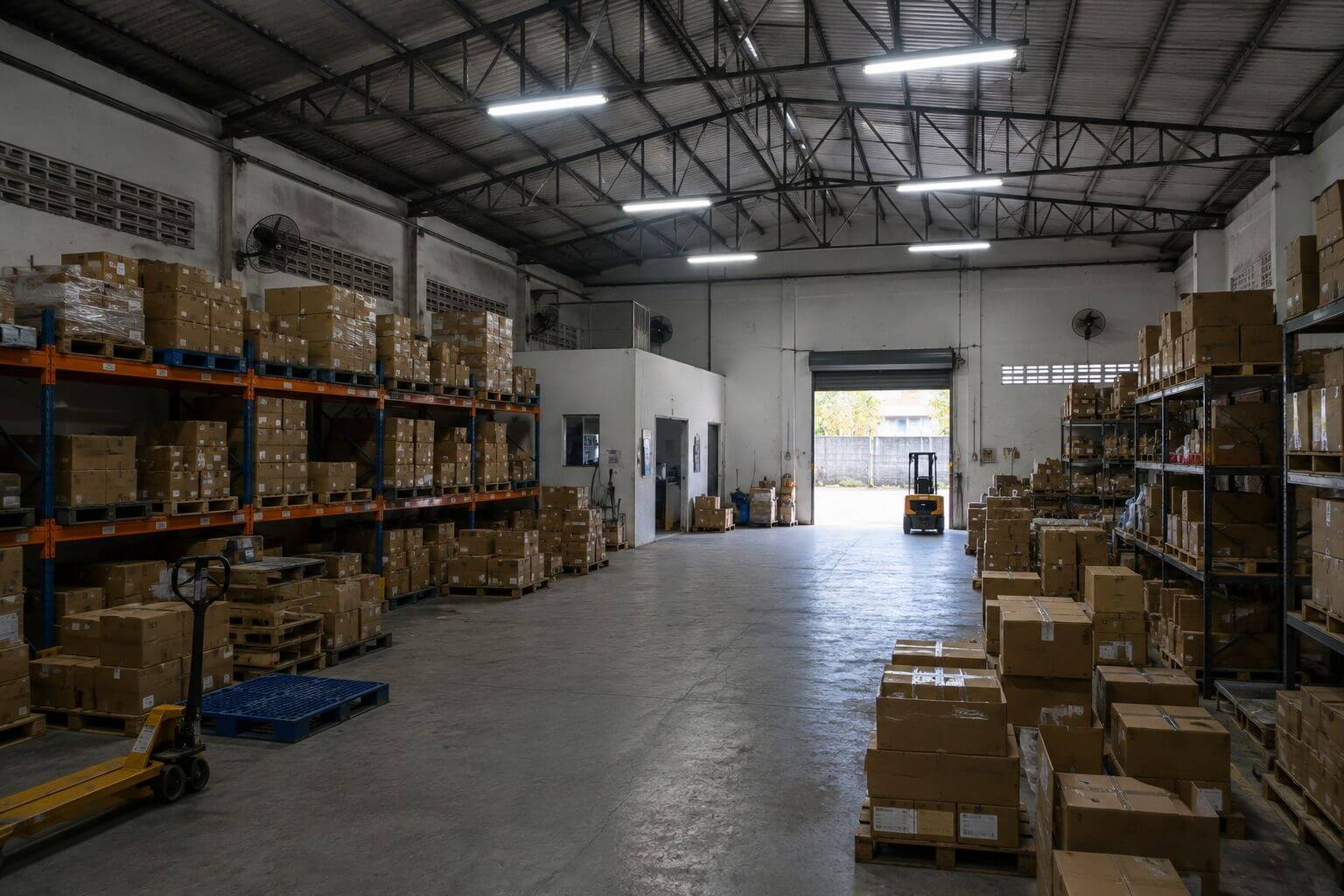
Before selecting products, it helps to look at how the building is used.
For example, a high-bay distribution center with narrow aisles and long operating hours has different lighting needs from a mixed-use warehouse.
Other warehouse areas, such as staging zones, packing stations, cold storage, and loading docks, may also require different lighting levels and layouts.Therefore, each zone should be reviewed based on how workers use the space.
Key factors affecting warehouse lighting design include:
- Ceiling height
- Rack configuration
- Reflectivity of surfaces
- Daylight availability
- Forklift traffic
- Shift patterns
- Task-specific visibility requirements
Businesses often compare fixture specifications without first understanding how each warehouse zone is used. However, different areas of a warehouse have different lighting requirements.
For instance, pick-and-pack areas usually need brighter and more focused lighting than bulk storage zones. Shipping areas may also require stronger visibility so workers can read labels and pallet markings quickly and accurately.
LED is the foundation, but not the full answer
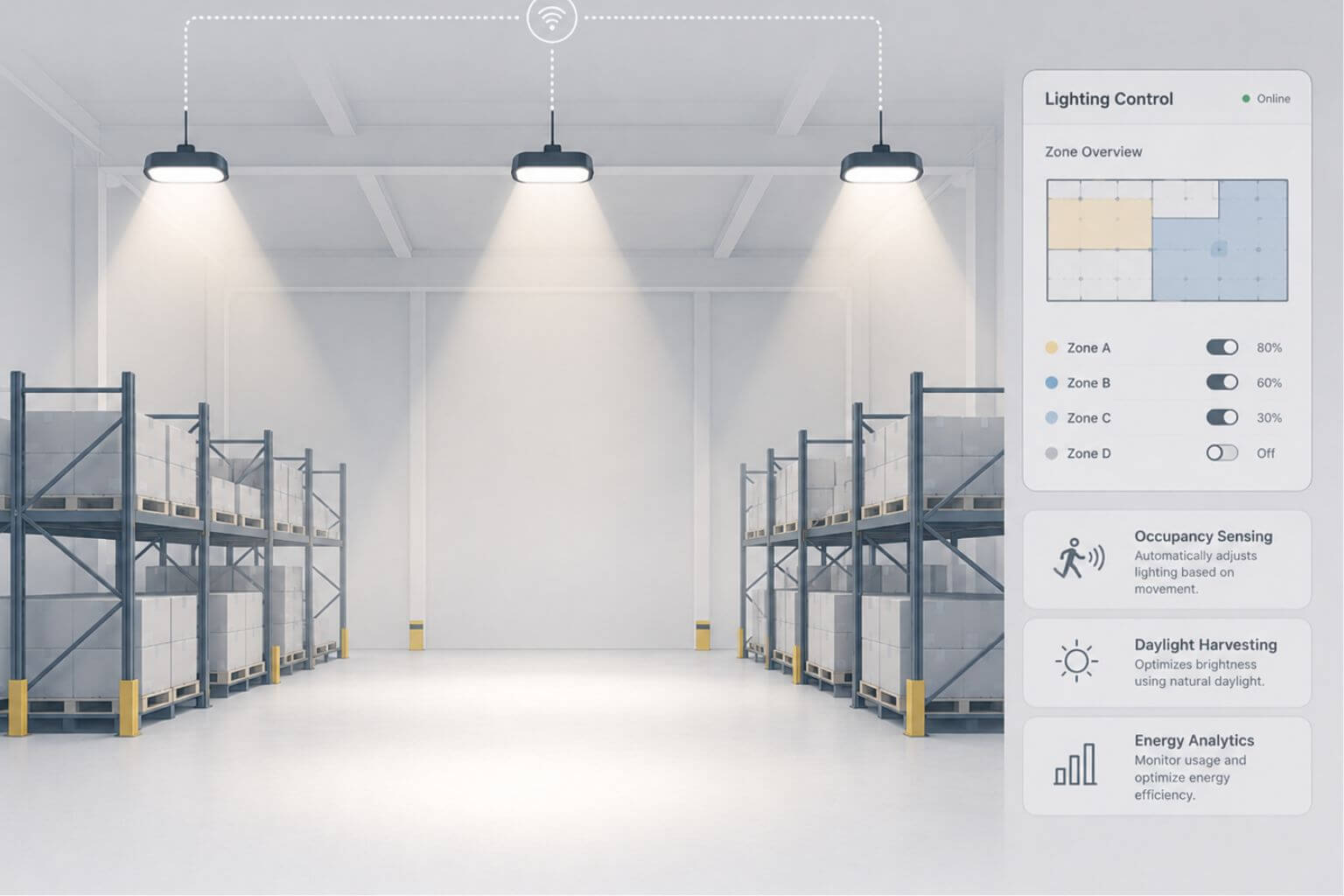
(Photos for illustration purpose only)
Upgrading to LED lighting is one of the most effective ways to improve warehouse lighting efficiency. Compared to traditional fluorescent or metal halide systems, LED fixtures consume less energy, last longer, and require less maintenance.
However, upgrading to LED alone is not always enough to maximize warehouse lighting efficiency.
Smart Lighting Goes Beyond LED Fixtures
Even energy-efficient LED fixtures can still waste electricity if lights remain fully switched on in unused areas.
Smart lighting systems help reduce unnecessary energy usage through:

Occupancy sensors

Daylight harvesting

Scheduling controls

Zoned lighting management
Insight
While LED improves efficiency, smart lighting controls ensure lighting is optimized for real operational needs. As a result, facilities can reduce wasted energy without compromising visibility or safety.
Smart Lighting Works Best with the Right Design
As systems age, maintenance costs may continue increasing while equipment efficiency declines. Conducting proactive assessments can help identify systems that require upgrades before failures become more severe or costly.
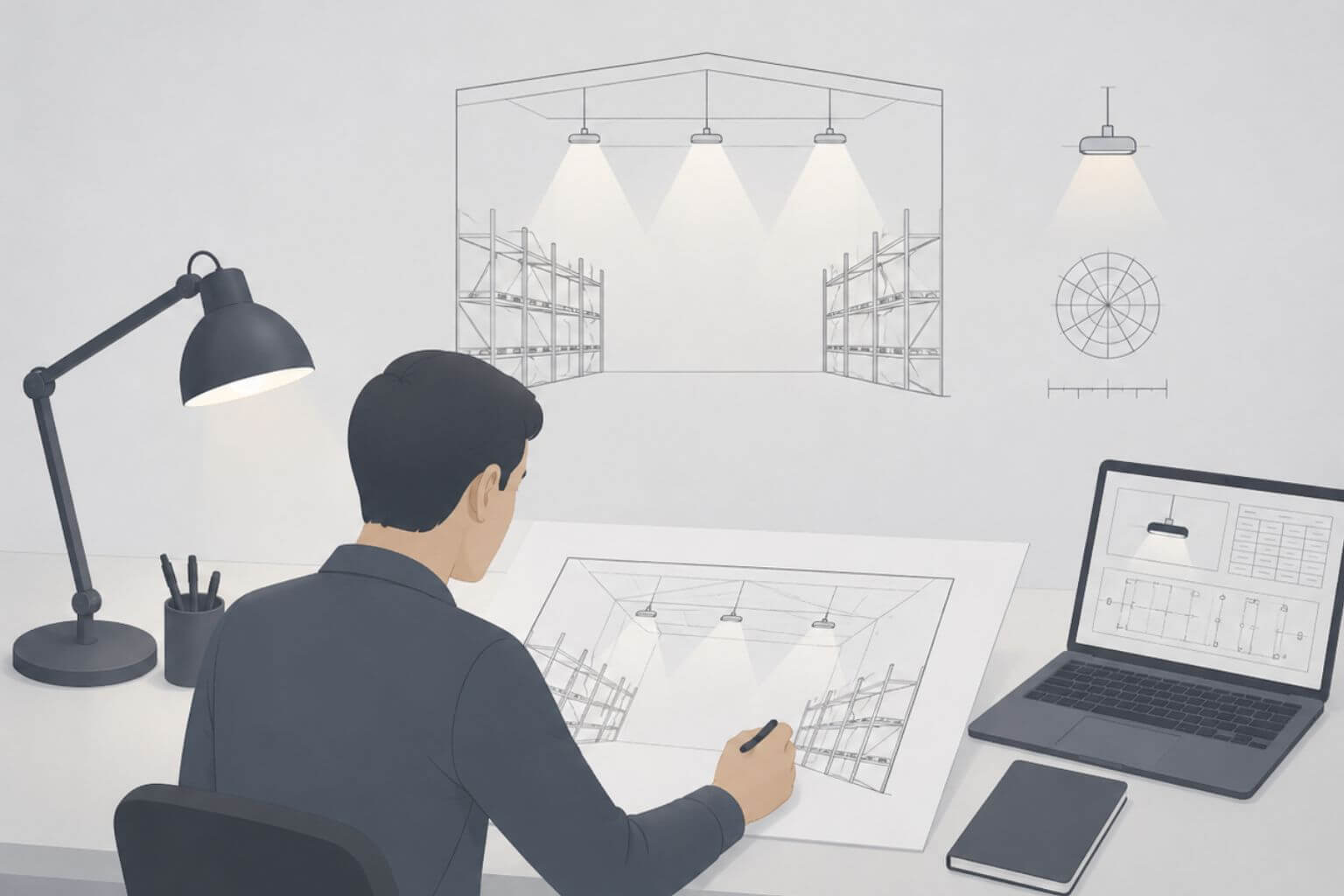
Good warehouse lighting design considers horizontal and vertical illumination. For example, horizontal illumination supports floor-level movement, while vertical illumination helps workers see rack faces, labels, and stored goods more clearly.
- In narrow aisles, fixture optics should support the aisle layout rather than spill light into unused spaces.
- In open loading or staging areas, broader distribution may be more appropriate.
Tips to Improve
- Align fixtures with warehouse aisle layouts to reduce wasted light
- Use broader light distribution in open warehouse zones
- Use focused lighting for storage and picking zones
Maintenance reduction is part of the return
Warehouse teams often focus on energy savings first, which is reasonable.
However, maintenance costs and disruption can be just as significant. This is especially true in facilities with high ceilings, specialized access equipment, or around-the-clock operations.
Frequent lamp failures often result in:
- Labor costs
- Picking and labeling errors
- Disruption to warehouse operations and scheduling
- Downtime in active work zones
Organizations managing multiple facilities, maintenance simplification can become a major operational advantage.
Safety, compliance, and sustainability move together
Cost is not the only factor in warehouse lighting decisions.
These choices also affect worker safety, inspection readiness, and environmental performance.
Better lighting supports safer movement, clearer signage, and stronger visibility in high-risk areas such as docks, intersections, and storage aisles.
Compliance and Sustainability Benefits
- Supports inspection readiness and workplace lighting requirements
- Contributes to carbon reduction and sustainability goals
- Helps reduce unnecessary energy consumption
- Supports long-term operational efficiency and reporting initiatives
Companies under pressure to lower emissions without compromising operations, lighting is one of the more practical places to start.
These products are designed with a focus on energy efficiency, product longevity, and system upgradeability to support more efficient long-term lighting management.
A better lighting strategy is usually phased
The most effective projects are rarely based on assumptions or rush decisions. They begin with assessment, move into zone-based design, and then align product selection with operational priorities.
Different lighting upgrade approaches can be tailored to your facility goals, budget, and operation priorities.

Full warehouse retrofits

Phased Lighting Upgrades

Task-specific Lighting Redesign

Maintenance-focus Upgrades
Enquire Now
Looking to improve your warehouse lighting efficiency? Contact our team to discuss the right lighting solution for your facility.