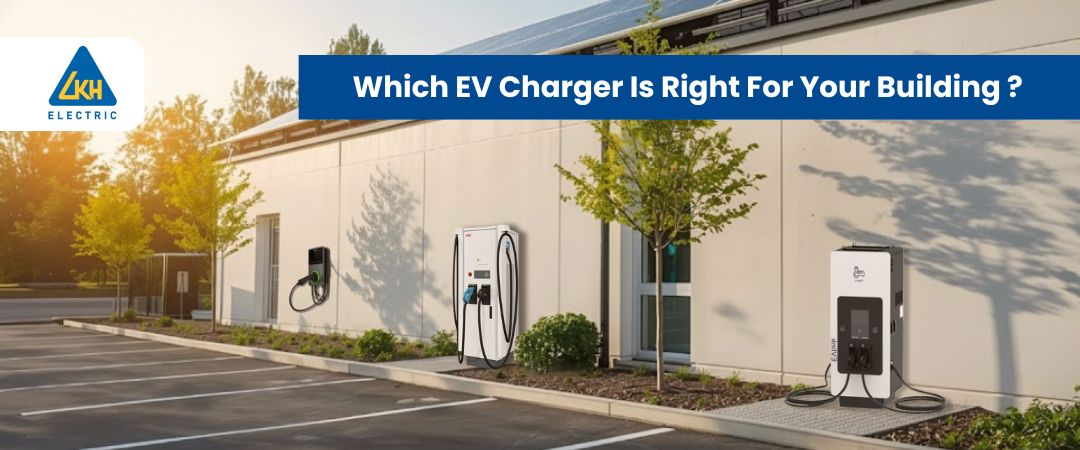
As EV adoption accelerates with businesses aiming to meet sustainability goals and the need for greater efficiency, building owners and facility managers are expected to provide reliable on-site charging solutions.
If you’re unsure where to start or which option best fits your building, this guide provides clear insights. The article will explain the key differences between AC and DC charging, helping you make a strategic decision that maximizes tenant satisfaction, operational efficiency, and meeting your goals.
Key Challenges for Commercial Buildings Installing EV Chargers
Limited Electrical Capacity
Upgrading infrastructure can be costly to support high-power chargers.
Charger Selection
Choosing between AC and DC requires balancing cost, speed, and maintenance.
Tenant Expectations
Reliable and convenient charging is essential for satisfaction.
What to Consider Before Choosing a Charger
Choosing the right EV charger for your building starts with understanding how your users behave and what your electrical system can support. Below are the key considerations made simple.
1. Type of Vehicles
Your vehicle mix determines charger suitability.
- Passenger EVs charge slowly and stay longer.
- Delivery vans and fleets need fast turnaround.
- Commercial vehicles charge during short breaks.
2. Number of Vehicles
More vehicles require more load planning.
- Supporting a few tenants?
- Large volume like mall visitors or condos?
3. Parking Behavior
How long do users typically park in your building?
- Long-stay parking (office workers, condo residents)
- Short-stay parking (mall visitors, delivery drivers)
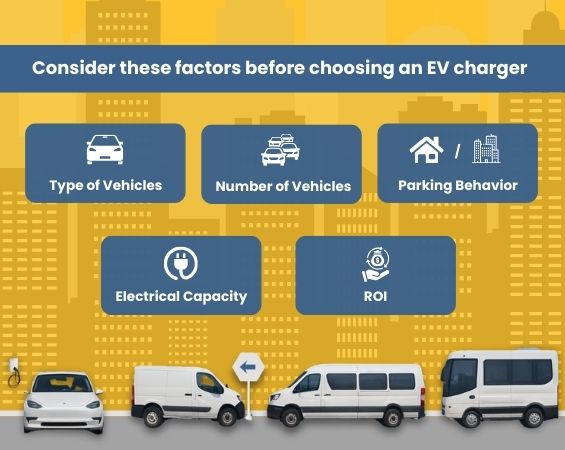
4. Electrical Capacity
- Limited spare power favors AC chargers (lower load, easier installation). Sufficient power enables DC chargers.
- Early load calculations prevent costly redesigns.
5. Return on Investment (ROI)
- Consider long-term return on investment based on utilization patterns and your charging business model for sustainable growth.
Understanding the Difference Between AC and DC Chargers
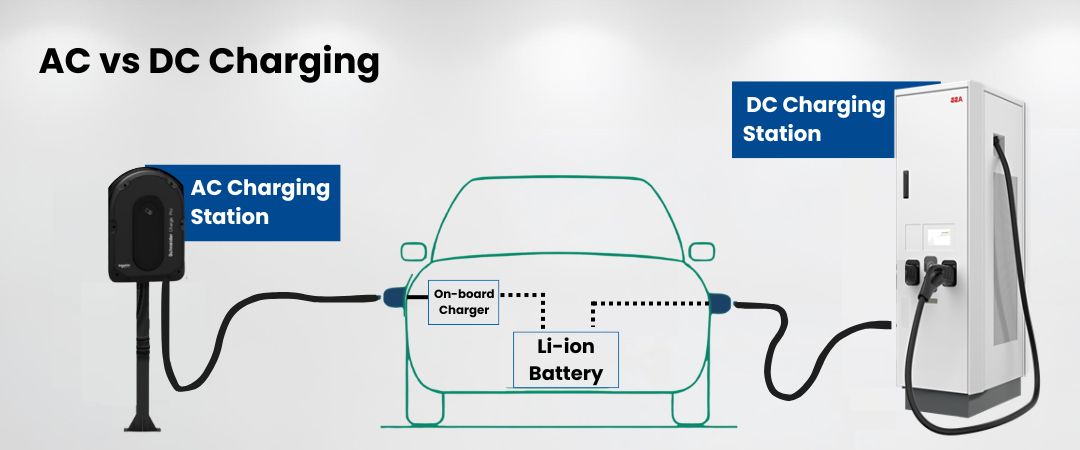
AC and DC chargers deliver electricity to an EV in two different ways. AC chargers supply alternating current to the car, and the vehicle’s onboard charger converts it into DC before it enters the battery. This built-in converter is small, so charging is slower.
On the other hand, DC chargers have a powerful converter inside the charger itself, allowing them to send direct current straight into the battery. This bypasses the car’s onboard charger and results in much faster charging speeds.
Let’s explore the comprehensive different as below to find the one to suite you:
| Category | AC Charging (Alternating Current) |
DC Charging (Direct Current) |
| How It Works | Uses the vehicle’s internal onboard charger to convert AC to DC | Has a built-in converter inside the charger that sends DC directly to the battery |
| Charging Speed | Slower (4–10 hours depending on power level) | Much faster (30-120 minutes depending on kW & vehicle) |
| Power Levels | Typically 7–22 kW | Typically 30–360 kW |
| Best For | Long-stay parking: offices, condos, staff parking | Short-stay or high turnover: malls, fleets, public charging |
| Electrical Load Needed | Low to moderate | High load, may require upgrades |
| Installation Cost | Lower CAPEX & OPEX | Higher cost for equipment, cabling & power upgrades |
| Charger Size | Compact, wall-mounted or small pedestal | Larger units with separate cooling and heavier infrastructure |
| Usage Behaviour | Charging slowly over long hours | Quick top-ups or full charge in short visits |
| Ideal User | Employees, residents, overnight chargers | Visitors, fleet vehicles, delivery drivers |
| Revenue Model | Steady, lower turnover | High turnover, faster ROI if utilisation is strong |
Which Charger Is Right for You?
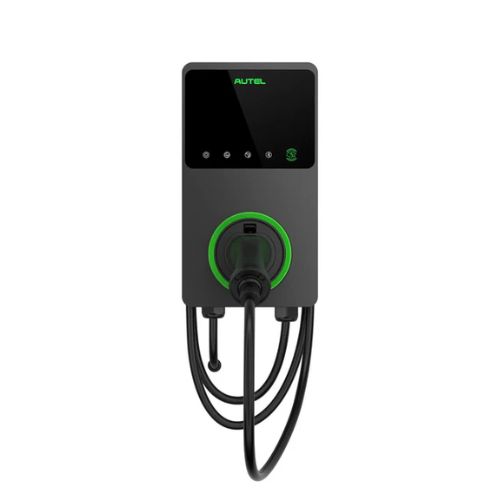
Choose AC Chargers For Long-Stay Parking
- Perfect for office workers, condo residents, and staff lots
- Cost-effective and easy to integrate with existing electrical infrastructure
- Ideal when users park for extended periods
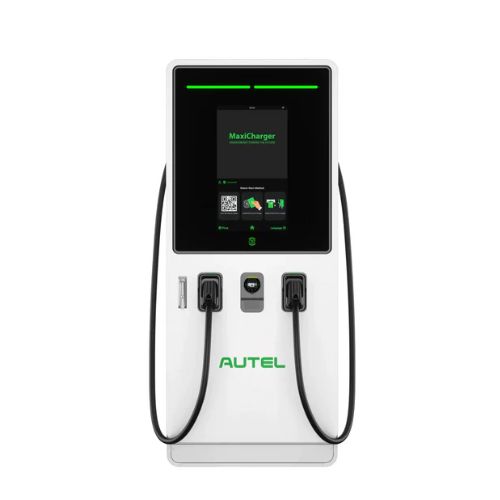
Choose DC Chargers For Fast Turnaround
- Ideal for shopping malls, visitor-heavy buildings, and commercial fleets
- High-power charging supports quick visits and higher revenue opportunities
- Best when rapid charging is essential
Let Our Experts Guide You
With over 1,000 successful installations across Singapore, our team can help you select the perfect solution — whether AC, DC, or a combination that fits your tenants’ needs, parking behaviour, and building capacity.
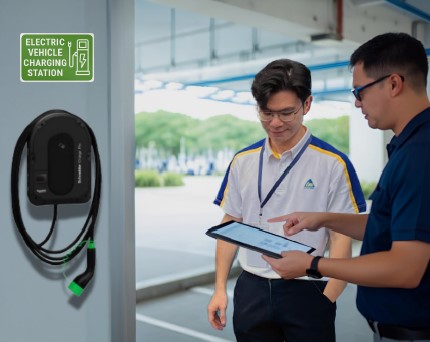
Proven Experience – Extensive work with commercial buildings, condos, and shopping malls across Singapore.
Tailored Recommendations – Solutions based on your electrical capacity, budget, and specific requirements.
Ongoing Support – Smooth installation and continuous support for hassle-free operation and maintenance.
Enquire Now
Enquire now to find out how our EV charging solutions can make switching to electric vehicles easier, faster, and more convenient for you.