
In modern building operations, downtime is one of the most expensive and disruptive challenges. Equipment failures rarely happen without warning, yet most facilities still rely on reactive maintenance methods that only respond after problems occur.
This is where predictive maintenance in smart buildings is changing the way facilities are managed.
Instead of waiting for breakdowns, smart systems use real-time data to detect early warning signs and reduce the risk of failures before they cause downtime. The result is a shift from reactive repairs to proactive control, where maintenance is planned, precise, and significantly more cost-efficient.
Key Takeaways
The article explains how predictive maintenance in smart buildings uses IoT sensors, AI, and real-time monitoring to detect equipment issues before failures occur. Described as a form of “time travel” for building operations, predictive maintenance helps facility teams anticipate and solve problems before they happen, reducing downtime, lowering maintenance costs, improving efficiency, and supporting sustainability goals.
“Time Travel” Predictive Maintenance
Smart buildings use AI and real-time data to predict equipment failures early, allowing teams to fix issues before disruptions occur.
Smarter Building Operations
IoT sensors and analytics continuously monitor building systems, enabling proactive and data-driven maintenance decisions.
Better Efficiency and Sustainability
Predictive maintenance reduces energy waste, extends equipment lifespan, lowers operational costs, and supports sustainability initiatives.
What is Predictive Maintenance?

Predictive maintenance is a proactive strategy that uses data-driven intelligence to identify potential equipment failures before they occur. Unlike traditional maintenance, which follows fixed schedules or reacts only after a breakdown, predictive maintenance enables a shift from hindsight to foresight.
Think of it as a “Time Machine” for building operations— it analyses past performance, monitors real-time conditions, and predicts what may happen next.
This approach helps facility teams:
- Reduce unnecessary maintenance work
- Prevent unexpected equipment failure
- Improve operational reliability
- Extend equipment lifespan
In essence, it ensures maintenance happens at the right time—not too early, and not too late.
“Time Travel” Predictive Maintenance That Fixes Problems Before They Happen
In a smart building, predictive maintenance acts as an operational “time machine,” using data to bridge the gap between the present and the future. By analyzing historical performance and monitoring real-time conditions, the system allows facility teams to spot early warning signs before they escalate into breakdowns.
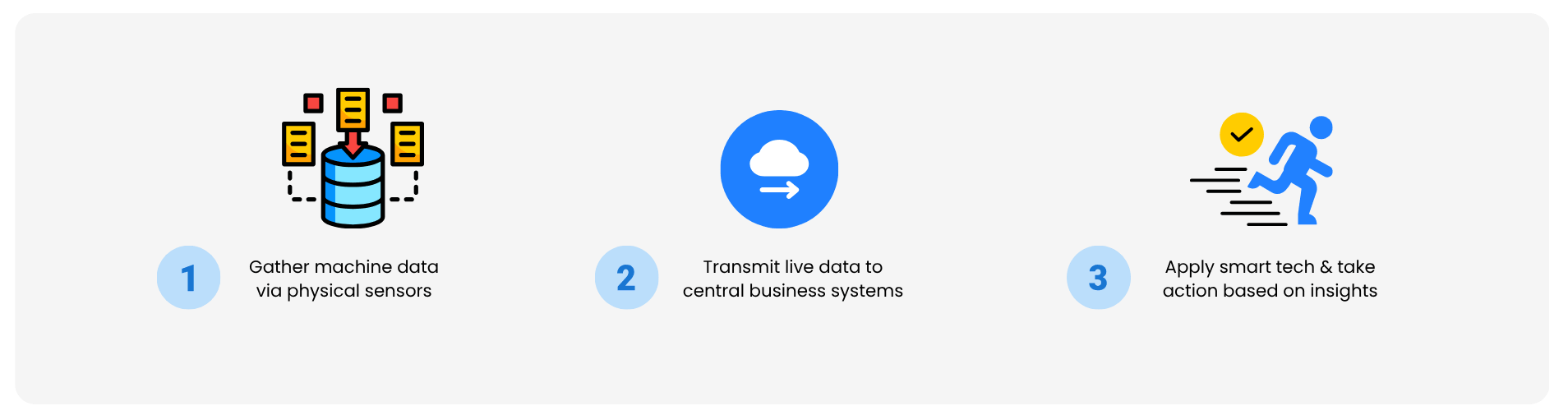
This “time travel” capability is powered by three core pillars that turn raw data into future action:
| Phase | Purpose | Outcome |
| 1. Gather History | Uses past performance to establish a “source of truth” for what normal looks like. | Establishing the “Baseline”: Knowing how the building lived in the past. |
| 2. Monitor Real-Time | Continuously tracks current equipment load and energy usage. | Sensing the “Present”: Detecting subtle ripples or deviations as they happen. |
| 3. Predict the Future | Uses AI to identify unusual patterns and trigger automated adjustments. |
Rewriting the “Future”: Resolving a stress point today so the failure never occurs.
|
With better visibility and early insights, facility teams can:
- Identify issues earlier
- Make more informed maintenance decisions
- Reduce reliance on reactive servicing over time
It helps facility teams reduce diagnostic time, respond faster to equipment issues, and minimise the risk of costly downtime.
Reactive vs. Predictive: How Smart Buildings Win
Traditional maintenance reacts after failures, causing downtime and higher costs. Predictive maintenance uses IoT and AI insights to detect issues early and enable timely intervention.
| Aspect | Traditional Maintenance | Smart Building Services |
| Issue Detection | After breakdown | Detected early or predicted before failure |
| Maintenance Schedule | Routine, fixed intervals | Based on real-time data |
| Diagnosis | Manual and time-consuming | Automated and pre-analysed |
| Response Time | Delayed | Faster and more targeted |
| Cost Efficiency | High downtime costs | Reduced maintenance and energy costs |
| Sustainability | Energy waste and inefficiency | Optimised systems, lower carbon footprint |
The difference is clear: smart building technology turns maintenance into foresight, not hindsight.
The Sustainability Edge
Predictive intelligence isn’t just about preventing downtime—it also plays a key role in improving energy efficiency and long-term sustainability in smart buildings.
Smart building predictive maintenance, supported by energy management systems, IoT sensors, and AI analytics, helps reduce unnecessary energy consumption and the emissions associated with it. Early intervention also minimises wear and tear, extending asset lifespan and reducing material waste over time.Together, these improvements support more sustainable building operations with lower environmental impact.
Studies suggest predictive maintenance can reduce maintenance costs by 20–30% while improving overall system efficiency, making it a practical approach for both cost control and resource optimisation.
Predictive maintenance also helps smart buildings:
Each avoided breakdown and optimised kilowatt-hour is a step toward a greener, more responsible building.
Conclusion: Solving Tomorrow’s Building Problems Today
Reactive maintenance waits for problems to happen. Smart building predictive maintenance helps teams see warning signs earlier and act before issues escalate.
By learning from the past, monitoring the present, and anticipating future risks, smart buildings give facility teams a practical form of “time travel” — solving tomorrow’s problems before they become today’s downtime.
Enquire Now
Lim Kim Hai Electric helps organisations explore practical ways to improve efficiency, reduce downtime risk, and take the first step toward smarter, more sustainable building operations.
Interested in exploring what this could mean for your building? Fill in the form and our team will get in touch.